Certified Business
With over 100,000 orders
With over 100,000 orders
Tile & Stone Care products support cleaning, sealing, enhancing, surface treatment, preparation, polishing, and restoration of tile, grout, and natural stone. Shop cleaners, sealers, enhancers, grout haze and stain removers, surface treatments, polishing products, and restoration solutions for compatible porcelain, ceramic, marble, granite, travertine, limestone, grout, and other surfaces.
 HMK P324 No-Rinse Liquid Stone Soap
 HMK R155 Intensive Cleaner - Acid-Free
 Miracle Sealants Travertine Fill Kit
 HMK S234 Extra Stain Protection Stone Sealer
 Miracle Sealants Heavy-Duty Acidic Cleaner
 HMK R179 Rust Remover for Marble & Soft Stone
 HMK P321 Granite and Marble Polishing Paste
Porous natural stone, cementitious grout, masonry, and certain unglazed or porous tile surfaces can benefit from a compatible sealer. Dense glazed tile and other low-porosity materials may not require the same treatment. Whether sealing is appropriate depends on material porosity, finish, exposure, and the sealer manufacturer's recommendations.
Penetrating or impregnating sealers enter compatible porous materials and help reduce absorption without forming a continuous surface coating. Topical sealers form a film or coating at the surface and can alter appearance, gloss, maintenance, and slip characteristics. Product suitability depends on the material, location, and desired finish.
The correct grout haze remover depends on the grout type and surface material. Cementitious grout residue and epoxy grout haze can require different cleaners, and acidic products can damage acid-sensitive stone such as marble or limestone. Identify both the residue and the tile or stone before selecting a cleaning product.
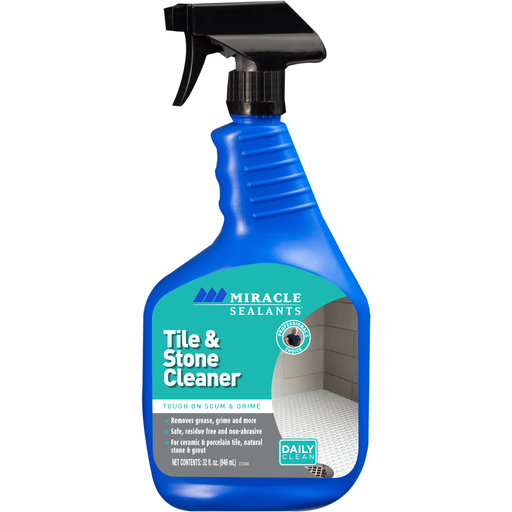
Some cleaners are formulated for both tile and compatible natural stone, but not every tile cleaner is stone-safe. Acidic or highly alkaline products can affect certain stones and finishes. Check the cleaner's approved surfaces and select a formulation appropriate for the specific ceramic, porcelain, grout, or natural stone being cleaned.
An enhancer is used on compatible porous tile or natural stone to deepen color, emphasize natural variation, or create a richer appearance. Some products combine enhancing and sealing functions. Because enhancement can noticeably change the finished appearance, test the product on an inconspicuous area before treating the entire surface.
Stone polishing can use polishing powders, compounds, abrasives, and restoration products selected for the specific stone and finish. Marble, limestone, travertine, and granite can require different products and processes. The appropriate method also depends on whether the surface is dull, etched, scratched, worn, or simply being maintained.
Staining occurs when substances penetrate or discolor susceptible stone, while etching is a chemical reaction that alters the surface itself. Acid-sensitive stones such as marble and limestone can etch from acidic foods, cleaners, or other substances. Rust, oils, moisture, minerals, and organic materials can produce different types of staining.
Identify the surface material, finish, porosity, existing treatments, and the problem or maintenance goal first. Then determine whether you need a cleaner, stain remover, sealer, enhancer, surface treatment, polishing product, or restoration product. Verify compatibility with the specific surface and application before treating the complete installation.